Work. Learn. Connect. Across the Atlantic.
What is it like to work in your trade in another country?
Crafting Futures connects skilled tradespeople and businesses in Alberta, Canada, and Baden-Württemberg, Germany through international work experience, professional exchange and mobility.
Recently qualified skilled tradespeople can travel as a group and spend three months gaining hands-on experience with a host business in the partner region, while discovering a different workplace culture and building international connections.
Be part of the first exchange in 2027 and help shape what comes next.
One program. Two directions.
The project is jointly led by the European-Canadian Centre for Innovation & Research (ECCIR) in Canada and Handwerk International Baden-Württemberg in Germany. Each partner coordinates the groups, mobility opportunities and participation in their respective region.
This page focuses on opportunities for Alberta skilled tradespeople and Edmonton-area businesses.
Looking for the Baden-Württemberg → Alberta side? Visit Handwerk International Baden-Württemberg (WEBSITE COMING SOON)
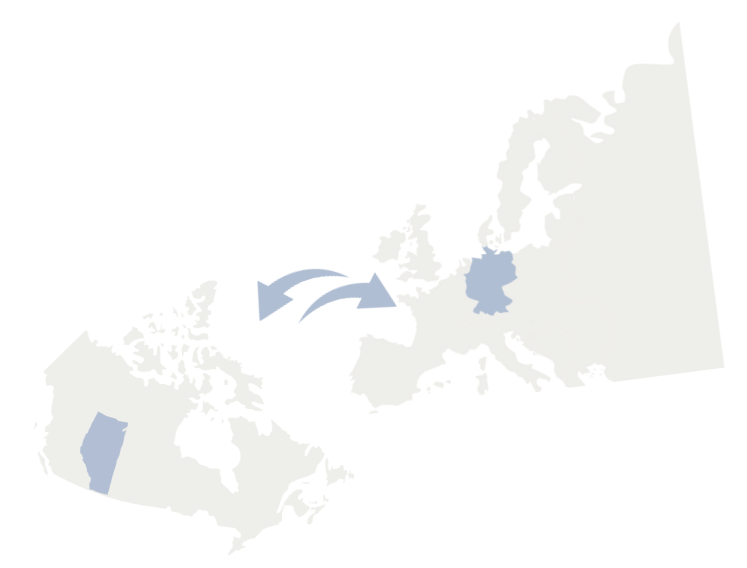
Edmonton, Alberta → Stuttgart, Germany
Skilled tradespeople from Alberta travel to Germany for a three-month internship with a host business.
ECCIR coordinates the Alberta side, including participant recruitment, business matching and programme support.
Stuttgart, Germany → Edmonton, Alberta
Skilled tradespeople from Baden-Württemberg travel to Alberta for a three-month internship with a host business.
Handwerk International Baden-Württemberg coordinates the German side, including participant recruitment, business matching and program support.
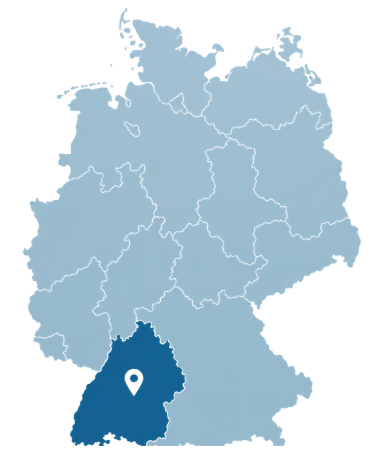
Stuttgart, Baden-Württemberg
Stuttgart is the capital of Baden-Württemberg and one of Germany’s major centres for industry, engineering and manufacturing. The region has a strong skilled trades sector and a long tradition of vocational education and training. Participants will experience this professional environment through their three-month internship and the wider Crafting Futures Program.
The Pilot at a glance
Work experience abroad — from application to the workplace
01 — Apply
Submit your application between October 1 and November 15, 2026.
02 — Commit
If selected, confirm your participation and availability for the full three-month exchange.
03 — Prepare
We’ll help you prepare for your stay, including travel, accommodation, immigration guidance, insurance, language and intercultural preparation.
04 — The right match
You do not need to find a host business yourself. The Crafting Futures team works with you to identify a suitable match based on your trade, qualification, experience, interests and goals.
05 — Travel and connect
Travel to Stuttgart with your cohort and take part in group, networking and cultural activities.
06 — Work and learn
Complete your three-month internship alongside skilled tradespeople in Baden-Württemberg.
07 — Stay connected
Join the Crafting Futures network and help future participants learn from your experience.
What can Crafting Futures offer?
For skilled tradespeople
You will have the opportunity to:
Ready to take your skills to Germany?
Applicants must:
• Be 18–35 years old
• Be a Canadian citizen
• Hold a Journeyperson Certificate or equivalent skilled trades qualification
• Have obtained their skilled trades qualification within the past three years
• Have at least one year of professional experience in their skilled trade
• Be available for the full three-month internship in Stuttgart
• Be willing and able to participate in the group mobility program and group activities
Your Contribution
Program funding helps cover the costs of your exchange. Your contribution is approx. CAD $1,500–1,700.
For Edmonton skilled trades businesses
Skilled trades businesses in Edmonton and the surrounding region can welcome a qualified skilled trades intern from Stuttgart for three months.
Hosting an intern provides an opportunity to:
We match participants and businesses. Finding the right fit is an important part of the program. Participants and host businesses are matched based on factors such as trade, professional experience, skills, interests, workplace environment and availability.
Want to host a skilled tradesperson from Germany?
Interested in bringing international experience into your workplace? Get in touch with ECCIR to express your interest in becoming a Crafting Futures host business.
Information & Application
Find out more about the program, the three-month internship and the opportunities for skilled tradespeople and businesses at one of our upcoming information sessions.
[Information sessions will be announced soon]
Interested in applying?
Application details and the online application form will be available soon.
Crafting Futures is a pilot program. The first cohort will help test and refine a new model for skilled trades mobility between Alberta and Baden-Württemberg.
Participant and business feedback will help shape the program and future exchanges between the two regions.
Be part of the first cohort and help shape what comes next.
Who is behind Crafting Futures?
Crafting Futures – Transatlantic Pilot Project for Skilled Trades Mobility, Canada & Germany (2026–2029) is a joint initiative connecting the skilled trades sectors of Alberta and Baden-Württemberg.
European-Canadian Centre for Innovation & Research (ECCIR)
ECCIR strengthens innovation, research and business collaboration between Canada and Europe. Through strategic partnerships, funding support and mobility programs, ECCIR helps organizations innovate, grow and build meaningful international connections. For Crafting Futures, ECCIR leads the Canadian side of the project.

Handwerk International Baden-Württemberg
Handwerk International Baden-Württemberg supports skilled trades businesses in their international activities and connects the skilled trades sector with international partners. For Crafting Futures, Handwerk International leads the German side of the project.
Together, the two organizations connect skilled tradespeople, businesses and partners across Alberta and Baden-Württemberg.
The project is supported by the Transatlantic Program of the Federal Republic of Germany, funded by the European Recovery Program (ERP) of the Federal Ministry for Economic Affairs and Energy (BMWE)